
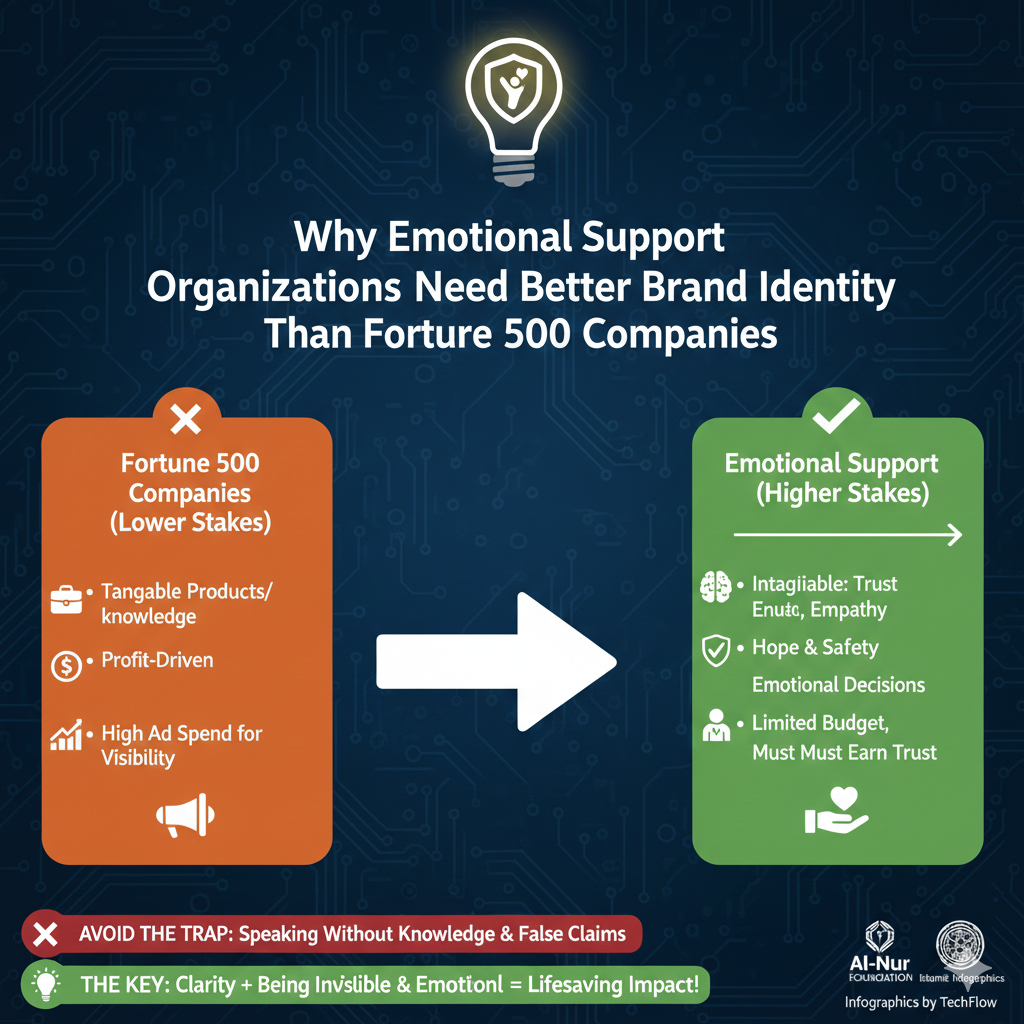
When someone searches “cancer emotional support” at 3 AM, drowning in fear after a terminal diagnosis, your brand identity isn’t marketing—it’s a lifeline. Yet most healthcare nonprofits treat branding as an afterthought, something to address “when we have budget.” This backwards thinking costs lives.
Not figuratively. Literally.
The Hidden Cost of Generic Naming
Consider how many cancer organizations include words like “hope,” “care,” “support,” or “foundation” in their names. Search “Hope Cancer Support” and you’ll find dozens of organizations competing for the same mindspace. When your organization’s name is indistinguishable from 50 others, you don’t just lose market share—you lose the patient frantically searching for help who ends up on the wrong website entirely.
This matters more in healthcare than almost any other sector because the stakes are infinitely higher. A consumer who clicks the wrong e-commerce site might buy inferior widgets.
A cancer patient who lands on the wrong support organization might give up entirely when the resources don’t fit their specific needs.
Shining Soul Institute chose a name that communicates healing without using the tired clichés saturating the healthcare nonprofit space. The metaphor resonates—cancer dims your light, support helps it shine again—without requiring medical terminology that might intimidate or overwhelm newly diagnosed patients.
But how do you know if your chosen name stands out? Before committing to a rebrand or launching a new program, verify its uniqueness. Checking how many similar organizations exist isn’t vanity—it’s strategic due diligence. It tells you whether your name will help or hinder people finding your specific resources when they need them most.
Beyond Names: Visual Identity That Communicates Safety
Brand identity extends far beyond names into visual elements that communicate trust before someone reads a single word. Color psychology, typography, imagery—these choices signal safety or trigger anxiety in vulnerable populations.
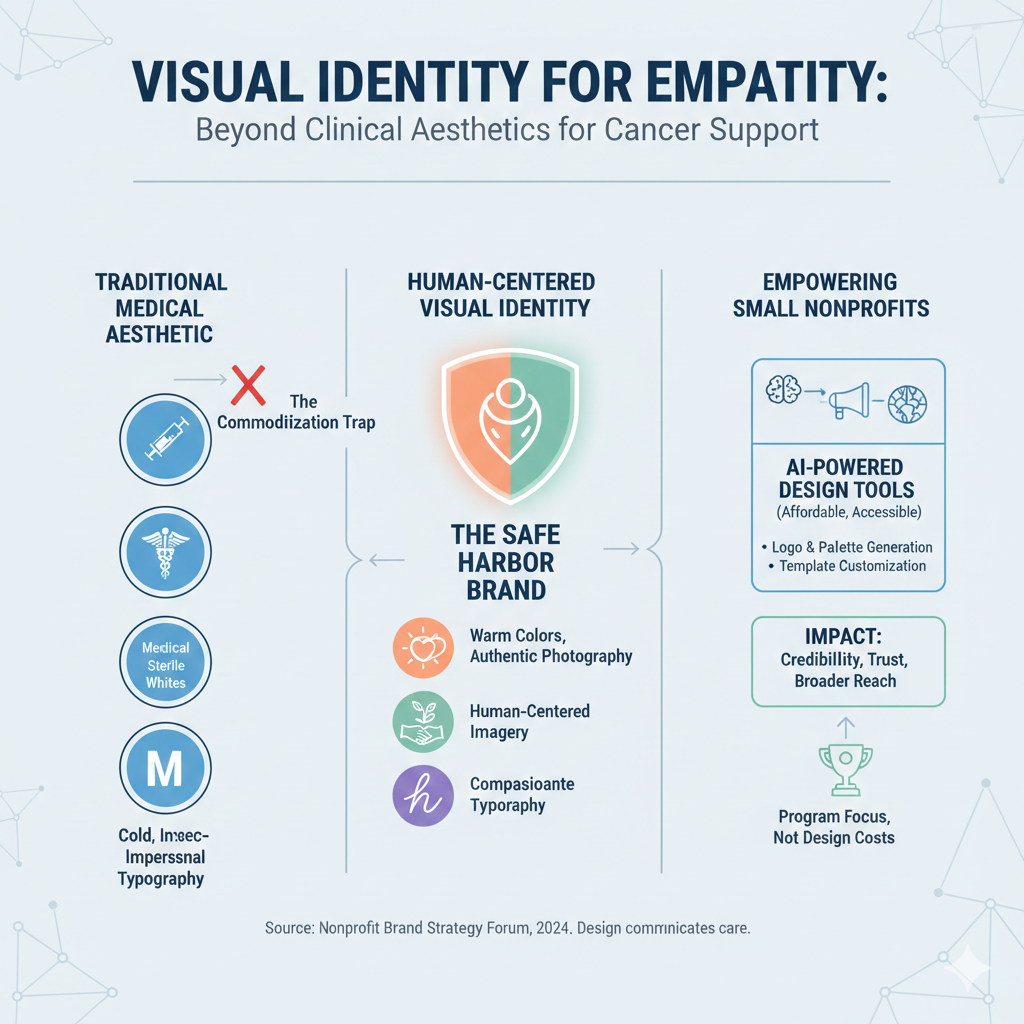
Healthcare nonprofits often default to medical aesthetics: clinical blues, sterile whites, stock photos of doctors in white coats. But cancer support organizations aren’t hospitals—they’re safe harbors from the medical industrial complex. Patients spend enough time in clinical environments. Your brand should feel different.
Warm colors, authentic photography, human-centered imagery—these visual elements communicate “we see you as a person, not a patient number.” They signal emotional support, not medical treatment.
The challenge for small nonprofits is accessing quality design resources on minimal budgets. Hiring boutique brand agencies costs $50K-$200K, money better spent on actual program delivery. Yet brand identity affects every interaction, every first impression, every moment someone decides whether to trust you with their vulnerability.
AI-powered design tools have democratized access to professional-quality brand elements. Name generation, logo creation, color palette development—capabilities that once required expensive agencies are now accessible to organizations running on shoestring budgets.
This isn’t about replacing human designers but about giving small nonprofits the foundation they need before they can afford comprehensive brand development.
The Technical Infrastructure Nobody Discusses
Strong brand identity becomes meaningless if people can’t find you. And here’s where most healthcare nonprofits fail spectacularly: they build beautiful websites with compelling stories but completely ignore technical SEO fundamentals.
Dr. Azadi could deliver the most transformative emotional support in existence, but if Google can’t properly index Shining Soul Institute’s website, cancer patients won’t discover those resources. All that expertise, all those life-saving programs—invisible because of technical oversights.
The frustrating part? These are fixable problems with straightforward solutions. Website sitemaps, proper metadata, structured data—the technical infrastructure that makes sites discoverable requires knowledge, not budget. Yet nonprofits skip these steps because they seem complicated or low-priority compared to program delivery.
This thinking is backwards. Technical SEO isn’t separate from mission—it’s mission-critical infrastructure. Every percentage point improvement in search visibility means more patients finding support when they desperately need it.
Generate proper sitemaps for your website. Submit them to search engines. Verify they’re being crawled. These basic steps take hours but compound for years, ensuring your organization appears when patients search for the help you provide.
Competitive Landscape Analysis in Healthcare
For-profit businesses obsess over competitive analysis. Healthcare nonprofits often avoid it, seeing collaboration over competition as morally superior. This mindset is noble but strategically naive.
You’re not competing for market share—you’re competing for mindshare and search visibility. If eight organizations serve the same geography with similar programs, understanding how you’re differentiated isn’t hostile—it’s clarifying.
When Shining Soul Institute positions itself around Dr. Azadi’s lived experience as a four-time cancer survivor, that’s differentiation rooted in authentic expertise. Other organizations might emphasize clinical psychologists, peer support networks, or integration with medical facilities. None of these approaches is better or worse—they serve different patient needs.
But if you don’t articulate your specific value proposition, patients can’t make informed choices about which organization fits their needs. Competitive analysis helps you identify your unique strengths and communicate them clearly.
This extends to digital presence. Analyze which organizations rank for search terms relevant to your mission. What content are they creating? What keywords are they targeting? What gaps exist in available resources?
Not to copy them—to find white space where you can provide differentiated value.
Email Marketing That Respects Trauma
Cancer support organizations should approach email marketing completely differently than traditional nonprofits. The typical nonprofit fundraising playbook—monthly newsletters with donation appeals, event invitations, and impact updates—can feel invasive to people navigating health crises.
Someone managing cancer treatment has limited emotional bandwidth. They’re drowning in medical bills, processing existential fear, supporting terrified family members, and trying to maintain some semblance of normal life. Your email about your annual gala fundraiser? It’s noise.
Worse, it’s potentially triggering noise.
Rethink your entire email strategy around providing value, not requesting action. Send resources when they’re seasonally relevant—coping strategies before holidays, caregiver self-care tips during intensive treatment months, survivorship resources around diagnosis anniversaries.
Segment ruthlessly. Newly diagnosed patients need different support than five-year survivors. Caregivers need different resources than patients. Creating preference centers where people control exactly what they receive isn’t just best practice—it’s basic respect.
And never, ever guilt someone for unsubscribing. Their treatment might have ended. Their loved one might have died. They shouldn’t have to endure painful reminders because you want to maintain email list metrics.
This privacy-conscious approach might grow your list more slowly, but engagement quality skyrockets. People voluntarily joining your community after experiencing value firsthand become your most committed advocates.
Protecting Anonymity While Building Community
The most powerful aspect of cancer support is community—knowing you’re not alone in your fear, anger, or grief. But building online communities around health crises requires tremendous sensitivity around privacy.
Some patients want to share their journey publicly, finding catharsis in vulnerability. Others need absolute anonymity to feel safe discussing their darkest fears. Both are valid. Your infrastructure should accommodate both.
This creates interesting technical challenges around user verification and spam prevention. How do you confirm legitimate interest without creating barriers? How do you filter automated bots without excluding people who legitimately want privacy protection?
Layered verification provides a solution. Initial engagement can be completely anonymous—browsing resources, downloading guides, joining open forums. As someone moves deeper into private support groups or one-on-one consultations, verification naturally increases. But that progression should feel protective, not invasive.
Some people will use temporary email addresses for initial exploration—they’re testing whether your organization is trustworthy before sharing personal information during a vulnerable time. This isn’t dishonesty—it’s self-protection. Recognize it as such.
The goal is creating spaces safe enough that someone can eventually transition from anonymous participant to identified community member because they trust you, not because you forced their hand.
Content Strategy Based on Search Intent
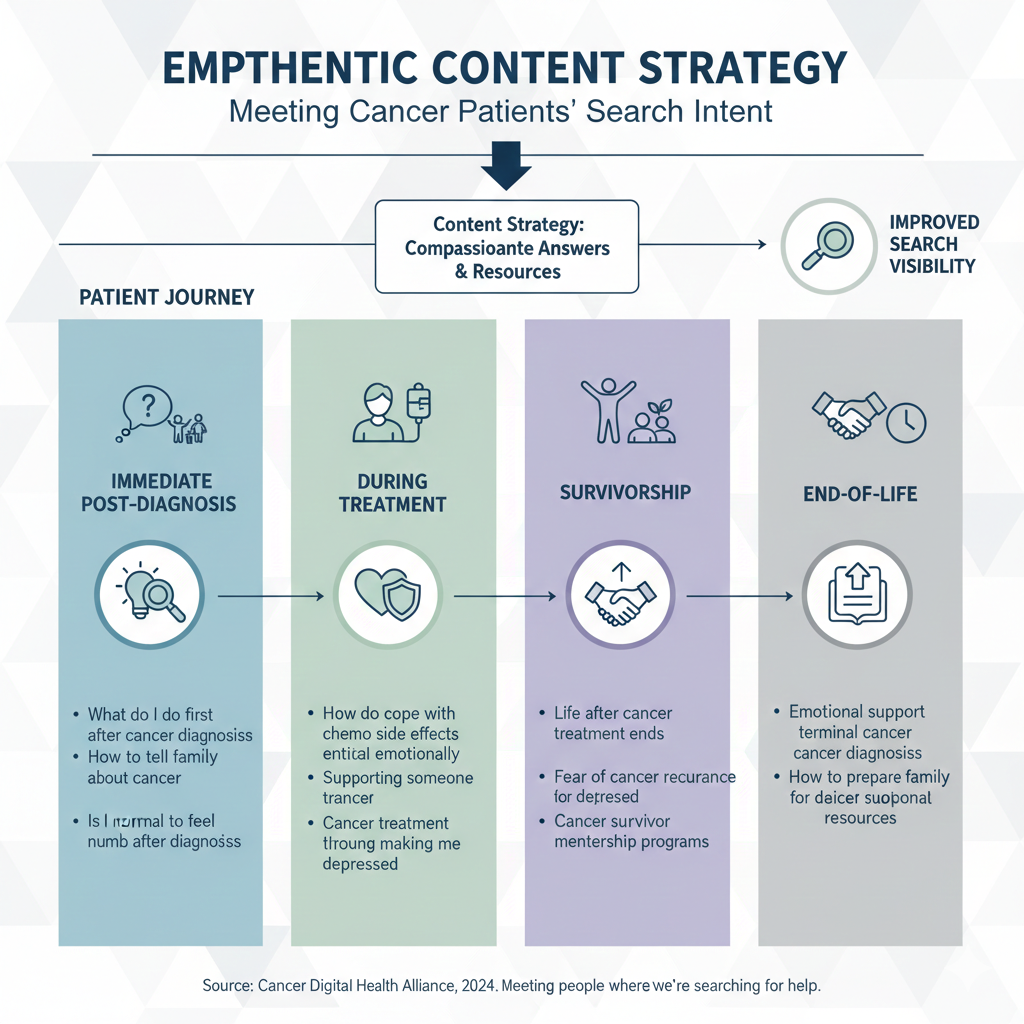
Cancer patients search for very specific information at different stages of their journey. Effective content strategy maps to this search intent:
Immediate Post-Diagnosis:
- “What do I do first after cancer diagnosis”
- “How to tell family about cancer”
- “Is it normal to feel numb after diagnosis”
During Treatment:
- “How to cope with chemo side effects emotionally”
- “Supporting someone through cancer treatment”
- “Cancer treatment making me depressed”
Survivorship:
- “Life after cancer treatment ends”
- “Fear of cancer recurrence”
- “Cancer survivor mentorship programs”
End-of-Life:
- “Emotional support terminal cancer diagnosis”
- “How to prepare family for death”
- “Hospice emotional support resources”
Create content answering these searches with depth, compassion, and practical resources. Each piece serves immediate value while improving search visibility for others asking similar questions.
This isn’t manipulation—it’s meeting people where they’re already searching for help. And it’s infinitely more effective than generic “awareness month” content created because the calendar says it’s Breast Cancer Awareness Month.
Measurement Beyond Metrics
Donors and boards demand metrics. How many people did you serve? What was your reach? What’s your email open rate?
But cancer support organizations should resist vanity metrics. Who cares if you have 100,000 social media followers if none of them engage with your programs? What’s the point of a 50% email open rate if people delete without reading?
Better measurements:
- Support group participation and retention
- Resource usage depth (not just downloads—actual engagement)
- Consultation requests and completion rates
- Qualitative feedback about life impact
- Community member journey progression (anonymous → identified → advocate)
One person whose life you genuinely improve through emotional support during their cancer journey creates more impact than 10,000 disengaged email subscribers. Track what demonstrates actual effectiveness, not just activity.
The Sustainability Question
Quick-growth tactics—viral campaigns, aggressive list building, flashy events—might spike your numbers temporarily. But cancer patients don’t need flash. They need reliability.
When someone’s navigating treatment, they need to know your organization will still exist next month, next year, five years from now. Building sustainable systems matters more than explosive growth.
This long-term perspective should shape every branding and marketing decision. That blog post you write today might provide comfort to someone three years from now during their darkest moment. That technical SEO work you implement this quarter might help hundreds of future patients discover your resources.
Shining Soul Institute has served patients since 2004 because it built sustainable systems, not because it chased trends. The same principle applies to digital presence—small, consistent improvements compound over time, creating organizations that endure.
Because that’s what cancer patients need. Not viral moments or inspiring TED talks—steady, reliable support they can count on throughout their entire journey, however long or short that may be.
Brand identity, search visibility, privacy protection—these aren’t marketing tactics. They’re the infrastructure that lets cancer support organizations deliver on their most important promise: we’ll be here when you need us most.
Conclusion
In the world of cancer support, branding isn’t decoration and marketing isn’t promotion—they’re part of care itself. When someone is searching for help in the quiet, terrifying hours of the night, your name, your website, your tone, and even how easily they can find you online can determine whether they feel seen or feel alone. A clear, distinctive identity helps them recognize you.
Strong search visibility helps them reach you. Thoughtful design and respectful communication help them trust you. Without these foundations, even the most compassionate programs remain invisible to the very people they’re meant to serve. Healthcare nonprofits must stop treating brand, technology, and discoverability as luxuries and start seeing them for what they truly are: life-saving infrastructure.
Because when everything else in a patient’s life feels uncertain, your organization should be the one thing that’s easy to find, safe to approach, and steady enough to lean on—every single time.